
Learn about zopiclone, how it is prescribed, important precautions, possible side effects, and responsible use. Our guide provides clear, easy-to-understand information to help you make informed decisions with your healthcare professional.
Zopiclone is a prescription sleeping tablet used for short-term insomnia. It can help you fall asleep and stay asleep, but it can also cause next-day drowsiness, memory problems and dependence, so it is usually prescribed for the shortest time possible. This guide explains what zopiclone is used for, how it works, how long it takes to work, the usual dose, side effects, overdose warning signs and withdrawal symptoms.
This page is general information and does not replace advice from your doctor, pharmacist or the leaflet supplied with your medicine.
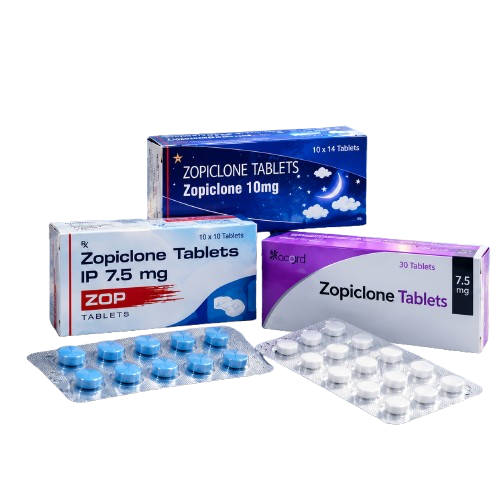
Zopiclone is a hypnotic medicine, often called a “Z-drug”. It is not a benzodiazepine, although it acts on similar brain pathways and carries similar risks, including dependence. In the UK, zopiclone tablets come in 3.75mg and 7.5mg strengths. A brand name you may see is Zimovane. Tablet appearance varies between manufacturers, so check any unfamiliar-looking tablet with your pharmacist.
Related: Zopiclone 7.5mg · Zopiclone 7.5mg Blue · Zopiclone 7.5mg Accord · Zopiclone 10mg
Zopiclone is prescribed for insomnia that is severe, disabling or causing significant distress, such as trouble falling asleep or waking frequently during the night. It is meant for short-term use alongside attention to the cause of the sleep problem. It is not a long-term fix.
Zopiclone boosts the effect of GABA (gamma-aminobutyric acid), a chemical messenger that slows brain activity. This calming effect makes it easier to fall asleep and stay asleep. The same effect explains why it can leave you drowsy, slow or forgetful the next day.
Take exactly what your prescriber has told you. For reference, UK prescribing information gives the following:
| Group | Usual dose |
|---|---|
| Adults | 7.5mg at bedtime, which is the maximum dose in 24 hours |
| Older adults | Usually a starting dose of 3.75mg |
| Liver or kidney problems | Usually a lower starting dose of 3.75mg |
Swallow the tablet with water just before bed, and only when you can sleep for 7 to 8 hours. If you miss a dose, do not take it later in the night or double up the next evening. Taking more than prescribed raises the risk of serious harm
Many people feel drowsy within 30 minutes to an hour, with effects peaking around one to two hours after taking it. This is why you should take it in bed rather than beforehand. The effects can last into the morning, especially at higher doses or in older adults, and can affect driving and operating machinery. It is an offence to drive while impaired by a medicine, so do not drive if you feel drowsy or unclear-headed.
Treatment is normally limited to a short course, typically up to about four weeks including any tapering. Over time the body can adapt (tolerance), so the tablets may work less well. If sleep problems continue, ask for a review rather than increasing the dose.
| Type | Examples |
|---|---|
| Common | Bitter or metallic taste, dry mouth, drowsiness or dizziness the next day, headache, nausea |
| Less common but serious | Confusion, memory loss, mood changes, hallucinations, and complex sleep behaviours such as sleepwalking, eating, or driving while not fully awake with no memory afterwards |
| Needs urgent help | Swelling of the face, lips or throat, rash, difficulty breathing |
Speak to a healthcare professional promptly if you experience any of the serious effects. You can report side effects through the MHRA Yellow Card scheme.
Zopiclone is generally unsuitable for people with an allergy to it, severe breathing problems, sleep apnoea, severe liver problems or myasthenia gravis. Extra care is needed if you are older, have kidney or liver problems, or have a history of alcohol or drug misuse or depression. Tell your prescriber if you are pregnant, planning pregnancy or breastfeeding, as the medicine can affect the baby.
Alcohol greatly increases sedation and breathing risks. Opioids, other sleeping medicines, sedating antihistamines, antidepressants and antipsychotics can also add to drowsiness. Some antibiotics (such as erythromycin) and antifungals can raise zopiclone levels, while St John’s wort can lower them. Tell your pharmacist about everything you take, including herbal products and supplements.
It can be. These terms are often confused:
Not everyone develops dependence, but the risk rises with higher doses and longer use, and it cannot be ruled out at prescribed doses.
Zopiclone withdrawal symptoms can include rebound insomnia (sleep worse than before), anxiety, irritability, tremor, sweating, palpitations, nausea and muscle aches. Seizures are rare but have been reported. If you have taken it regularly for more than a few weeks, talk to your GP about reducing gradually rather than stopping suddenly.
Related guide: Zopiclone withdrawal symptoms
Taking too much zopiclone is a medical emergency. Call 999 straight away and do not wait for symptoms to worsen. Do not drive yourself to hospital, and take the packet with you.
If you are having thoughts of harming yourself, contact 999 or NHS 111, or call Samaritans free on 116 123 (24 hours).
Signs of overdose include extreme drowsiness, confusion, slow or shallow breathing and unconsciousness. The risk is far higher when zopiclone is taken with alcohol or opioids.
Related guide: Zopiclone overdose
registered pharmacy. Because it is a controlled drug, prescriptions have additional legal requirements.
Websites or sellers offering zopiclone without a prescription are operating illegally, and tablets bought this way may be fake, wrongly dosed or contain other drugs. If you use an online pharmacy, check that it appears on the General Pharmaceutical Council register and that it asks about your medical history. If you cannot sleep and want help, book a GP appointment or ask your pharmacist.
Cognitive behavioural therapy for insomnia (CBT-I) is the recommended first-line treatment and has lasting benefits without the risk of dependence. Helpful habits include a regular wake-up time, limiting caffeine and screens before bed, and keeping the bedroom dark and cool. A GP can check for causes such as pain, anxiety, depression or sleep apnoea.
Yes. It is Schedule 4, Part I in the UK, so extra prescribing rules apply.
No. It can dangerously increase drowsiness and slow your breathing.
Only if you feel fully alert. Impairment can last into the next day.
This may be tolerance. Do not raise the dose; ask your prescriber for a review.
The lower strength is typically used for older adults or people with liver or kidney problems. Your prescriber chooses the right dose for you.
After a few nights of use, usually yes, though rebound insomnia is possible. After regular use, get advice from your GP first.
In your medicine packet, and on the electronic medicines compendium (see below).
Zopiclone patient information and sources
Always read the patient information leaflet supplied with your tablets. Official sources used for this guide: